Isaiah 55: 10-13
For as the rain and the snow come down from heaven and do not return there until they have watered the earth, making it bring forth and sprout, giving seed to the sower and bread to the eater, so shall my word be that goes out from my mouth; it shall not return to me empty, but it shall accomplish that which I purpose and succeed in the thing for which I sent it.
For you shall go out in joy and be led back in peace; the mountains and the hills before you shall burst into song, and all the trees of the field shall clap their hands. Instead of the thorn shall come up the cypress; instead of the brier shall come up the myrtle, and it shall be to the Lord for a memorial, for an everlasting sign that shall not be cut off.
Sermon Text
Water is life. That is one of the most basic truths in the world. Civilization began beside rivers all around the world. River valleys gave water and rich soil to the people who gathered around them. From that soil grew crops that fed people and animals. The waters that fell from the sky, that flowed across the land, that bubbled up from deep underground – all of these brought humanity to the place it is today. Even if we have become more adept at getting water from one place or another, we are still dependent on rivers, lakes, rain, and just a few inches of topsoil for all that sustains our life.
As I briefly said last week, we do not always see rain as a blessing today like our ancestors did. Rain is what cancels our plans, makes the grass grow faster between the times we cut it. Generally, when we see rain on the forecast, we begin to list all the problems that come from its arrival into our life. Sure, on a hot summer day we might look at the rainfall and say, “We needed this,” but that is only when we know we don’t have to go out and do. For those of us without crops to tend to or animals to graze, the necessity of rain is sometimes lost on it.
For the people of scripture, life was different. The crops grown in the Levant, the around the Jordan and stretching down into Egypt, were not as hearty as we might expect. Barley was the primary grain, olives the primary fruit used in all parts of life. Other crops were grown in addition to these, all with their own seasons, tolerances, and requirements. Similar to some regions of the American Midwest, the agriculture of Israel depended on snow melting off of nearby mountains to fill flood plains called “Wadis.” Rain would also fill these features, but the rainy season was brief compared to the rest of the year. Morning dew was perhaps the most regular water that the crops would receive, and covering the seedling with leaves was one method of keeping it there. In total, the average rainfall in the Levant during the time Isaiah was written was something like 20 inches a year, half of what we get here in West Virginia.[1]
For the people of God, throughout the Biblical Period, there was a constant anxiety about water and where it would come from. God is portrayed in the Hebrew Bible with imagery usually reserved for Storm Gods in other cultures. The God of Israel rides on flames and shoots lightning from the Heavenly Throne! The God of Israel brings the rain and holds it back. The God of Israel brings about the harvesttime, giving life through the deposition of water in the form of snow, of rain, and of the deep waters hidden away beneath the earth.
I grew up in a town that’s main industry was water. Berkeley Springs, West Virginia is named for the Fairfax Spring in the middle of the town of Bath. The smallest state park in West Virginia is only about two three blocks wide and a block across, but it has a source of life-giving water older than any settlement around it. The waters that flow out of that spring are an accident of geology. An aquifer that erosion slowly revealed over time. The water of the aquifer, replenished when the rain soaks through the earth and finds a place in the rocks below ground once again, is warmed underground and emerges at a lovely seventy-five degrees year-round.
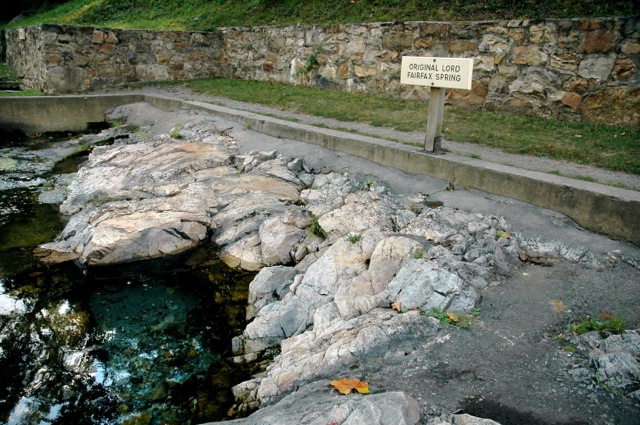
This kind of water, bubbling up from underground, is where the idea of “living water,” originates. While Jesus uses the term to describe the life-giving nature of faith, he describes it while standing next to a well. The idea then is that the living water he is offering is not only something that literally gives life, but that it is a spring you do not have to dig for. The water that Christ offers is something you can scoop up in your hand and take a big gulp of. It is not far away; it is close at hand.
The scripture we read today focuses on God bringing water to God’s people from on high. The rain falls and waters the fields, the snow that melts and fills the wadis. Isaiah describes the word of God as acting like those sources of life. When God speaks the words of God rush out and bring life to everything they touch. The words never fail to bring about something new, they never turn back to God and shrug their shoulders, the word of God always brings about something new – always fulfilling its purpose. When God speaks, the words always have something to offer.
The first day I preached in my first appointment, we sang a hymn together, “God hast Spoken by the Prophets,” and I believe that that hymn perfectly describes how God’s word finds its way to us. “God has spoken by the prophets,” giving us the words of scripture we depend upon. “God has spoken by Christ Jesus,” through the teachings of the apostles and the Gospels. The hymn concludes with a verse, “God is speaking by the Spirit,” and that verse reflects this passage best. The Spirit speaking to us now, through preachers and teachers, friends and family, and those mysterious happenstances that define a life of faith – that is the rain that falls and brings new life. That is God’s word raining down on us.
Sometimes the words take a while to sink in though. Sometimes it takes a lot in life to bring the life out of the words we have received. In these times, the word is like snow on a mountain, dripping slowly down until it becomes a great flood that washes and transforms the world below it. Still further back, the word may come to settle – in the pages of this book we call the Holy Bible, or in the traditions of the Church that have been passed down for centuries. These are the deep waters, the aquifers that we sometimes feel we need to dig deep down to find their truths. However, as Jesus promised the woman at the well, I think we will find that in scripture as well as in most of our life, the living waters we seek are much closer than we might even dream of them being.
The Word of God is the Water of life. If we seek after it and drink from it often, we will find ourselves transformed. Be willing to listen to what God is saying, and find that even a small whisper – the drip drop of some small stream – can make a big difference. The Grand Canyon was not formed all at once, but only because water flowed over it for millions of years. It is not enough to be near water, we have to be in it, and drink deep of it, to really be refreshed. I would encourage us all to think of God’s word that way.
We might consider it enough to get our weekly dose of scripture but take some time to really drink it now and then. You do not need a reading plan; you do not need some big goal with the project. Just pick up a bible and start reading. If you can only do one chapter a day, do it. If that is a chapter every few days, do it. Not every word you read will be the one that changes your life, but every word you read will make a difference. It will get you thinking, questioning, forming ideas and frameworks for the entirety of your life. We are never too old, or too young, to really take a leap and learn something about God. Life is all around us, falling from Heaven everyday and available too us if we just lean down and take a deep drink from what is right in front of us. Let us take that leap, let us drink deeply from that infinite spring, and let us see God giving us life, and life abundantly. – Amen.
[1] Issar, Arie and Zohar, Mattanyah. Climate Change: Environment and History of the Near East. 2E. (New York, New York: Springer. 2007)
 Teach us to Number our Days