I took a break from writing yesterday to rest. One of the unfortunate things about being in a city that you’re not used to is that the pollen is not of a variety that your immune system has any defense against. When you, like me, are allergic to just about everything, something as simple as a shift in pollen can ruin your day. Luckily the rain eventually fell and as evening came, my sinuses cleared. I was reminded of one of my favorite hymns,
“Sweet the rain’s new fall, Sunlit from Heaven.”
My one true enemy in life is tree-borne pollens.
Worship today was led by the first Indigenous Bishop on the Council, Bishop David Wilson. The timing of worship fell so that I missed his sermon, but as I wandered into the Press Conference room for our daily briefing I did so to the sound of hymns in Native Languages and exited the room to the same. The United Methodist Church has a checkered history with the Indigenous people around the world, it is hard to overstate the significance of an Indigenous Bishop presiding over a service prominently featuring Indigenous languages. The people and languages that this Church once worked to suppress are now celebrated – a statement of the power and potential of reconciliation.
This Conference has seen a variety of historic events. The removal of restrictive language around human sexuality allows churches and ministers to decide for themselves how they will handle matters of human sexuality; A new way of managing our Connection, one that focuses on regional governance and global collaboration; A new version of the Social Principles sets a baseline for the aspirational work of the Church as it navigates the world around it. These were what were given the name, “The Three Rs,” in the lead-up to Conference. The source of a great deal of conversation and stress leading up to General Conference these were considered to be what most of our discussion would circle around…
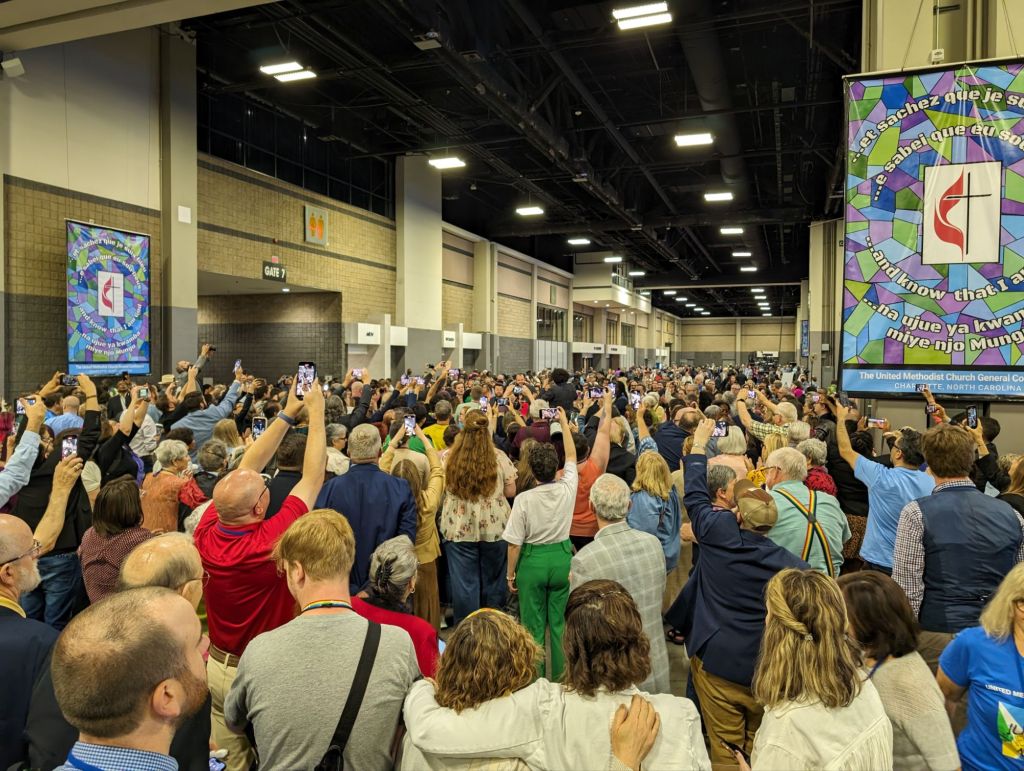
We were wrong. The final vote of the morning plenary saw 93% of the delegates from around the world approve the removal of exclusionary language. The most contentious matters relating to these pieces of legislation still passed in such a way that, even if the 120 delegates who were unable to attend for one reason or another universally opposed them (an impossibility really,) they would still have passed. The overwhelming witness of the Church in Europe, the Philippines, Africa, and the United States, is that the time to allow for latitude on contentious issues in the name of shared mission is here – and, really, has been for some time.
Delegates, observers, and others, celebrate following the passage of Calendar Item A05
The places where we did debate were focused on the ministries of the Church.
How do we fund education? How do we fund hospitals? How do we make sure that we can go out and do the work of the Church as the people of God? The Gospel needs to be preached! The work needs done! How will we go there? And who will do the work? These saw the majority of lengthy debates and close votes (these and retirement plans, but that always goes long… (Also a surprising amount of motions to turn down the air conditioning in the room?))
I do not know what the future holds. I think that some churches in the U.S. and some conferences in the world will choose to leave the UMC following the work we have undertaken this week. Yet, I have hope that going forward even those that leave will do so with a willingness to work together. We make the choice going forward whether we act in love or as agents of division. We make the choice if the Body of Christ is greater than even a matter as big as this.
There is a lot of work ahead of us, but it is necessary work. On one hand, we have to balance differences in opinion in a way we never have before, but on the other… We’ve been doing this for years already. We have been living as gay and straight, progressive and conservative for decades. We have just erased what made us live this way in whispers rather than out loud. The Gospel will still be proclaimed, the Word of God preached, and the means of grace richly poured out on a world that needs them more than ever.
A verse that has settled in my heart over the last year or so goes as follows,
Thus says the Lord, who makes a way in the sea, a path in the mighty waters, who brings forth chariot and horse, army and warrior; they lie down, they cannot rise,they are extinguished, quenched like a wick:
“Remember not the former things, nor consider the things of old. Behold, I am doing a new thing; now it springs forth, do you not perceive it? I will make a way in the wilderness and rivers in the desert. The wild beasts will honor me, the jackals and the ostriches, for I give water in the wilderness, rivers in the desert, to give drink to my chosen people, the people whom I formed for myself that they might declare my praise.”
As we go forward, let us do so as people who believe that God works through new things and not simply through the old. The Spirit of the Lord is alive and active and I plan to chase it wherever it leads me. May we see the fruits of the Spirit bursting from our midst as the dry parched lands find life and life abundant.
Today has been fairly quiet in terms of Conference Business. As the new week begins, there is lengthy discussion about the number of bishops that will serve within the African Conferences. This is very important legislation, but it is legislation that is not immediately applicable to my work in West Virginia. As such I have been digging through upcoming legislation while I watch the proceedings take place. I check to see if there is anything I should highlight which has implications for West Virginia. Mostly what is left for me to focus on – outside of matters of human sexuality, pension, and the final piece of regionalization – deals with the clarification and reworking of ordination requirements. It is all /very/ thrilling, let me tell you.
I would like, in the midst of a quieter day, to speak to the way that God brings small moments out of obscurity into something much more significant. A moment that began several years ago but that found a definite form yesterday.
Sometime in college, I’ll put a year to it of 2014, I was in a physics class during a summer term. It was as thrilling as you might expect a summer physics class to be. During the lab attached to that class, someone began to sing out loud. I was apparently impressed at their willingness to sing out in the middle of a class and that led to me choosing to sit with them in lecture. Soon, I had another friend in my life. As with so many friendships, we graduated and went into our graduate and career fields and lost touch outside of occasional interactions online.
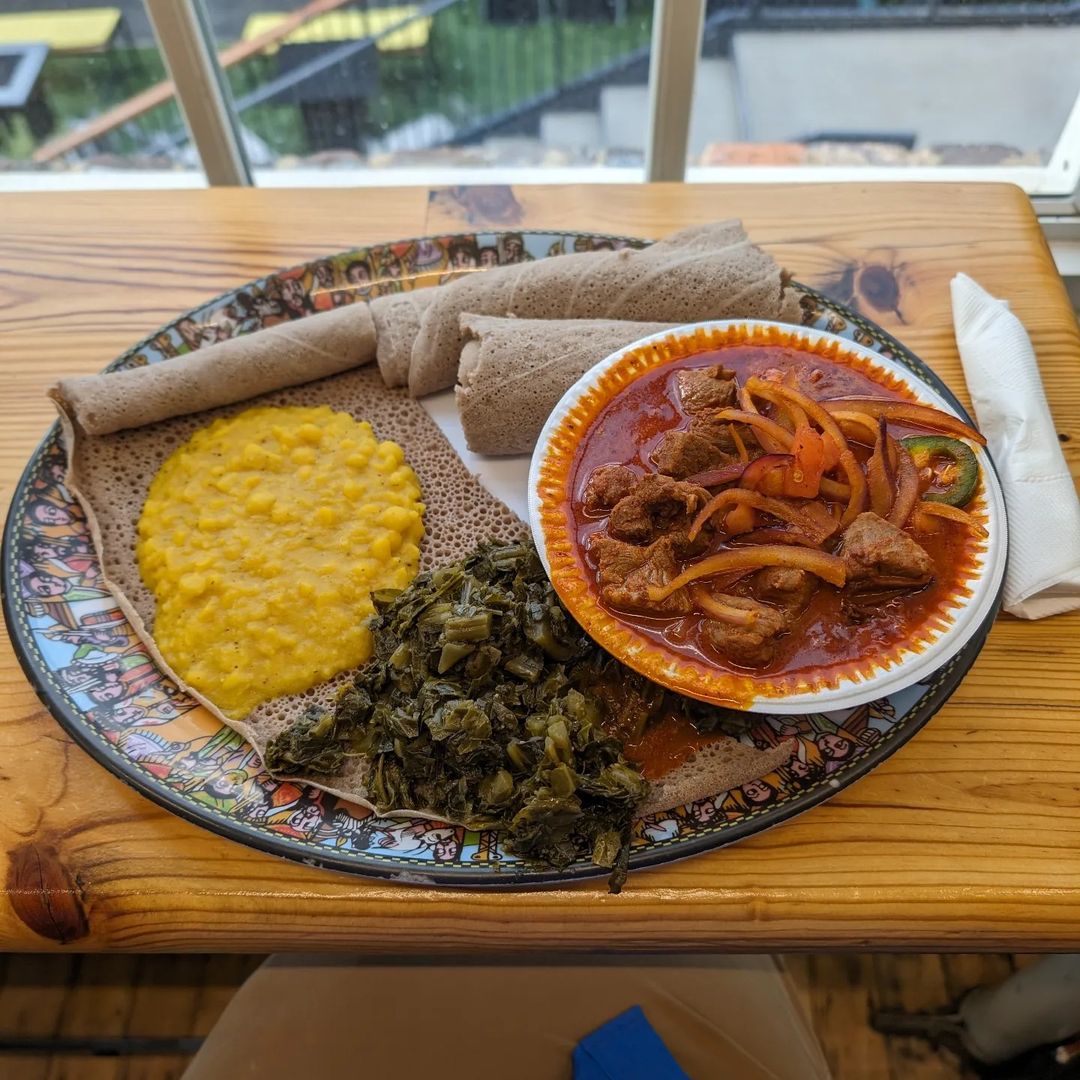
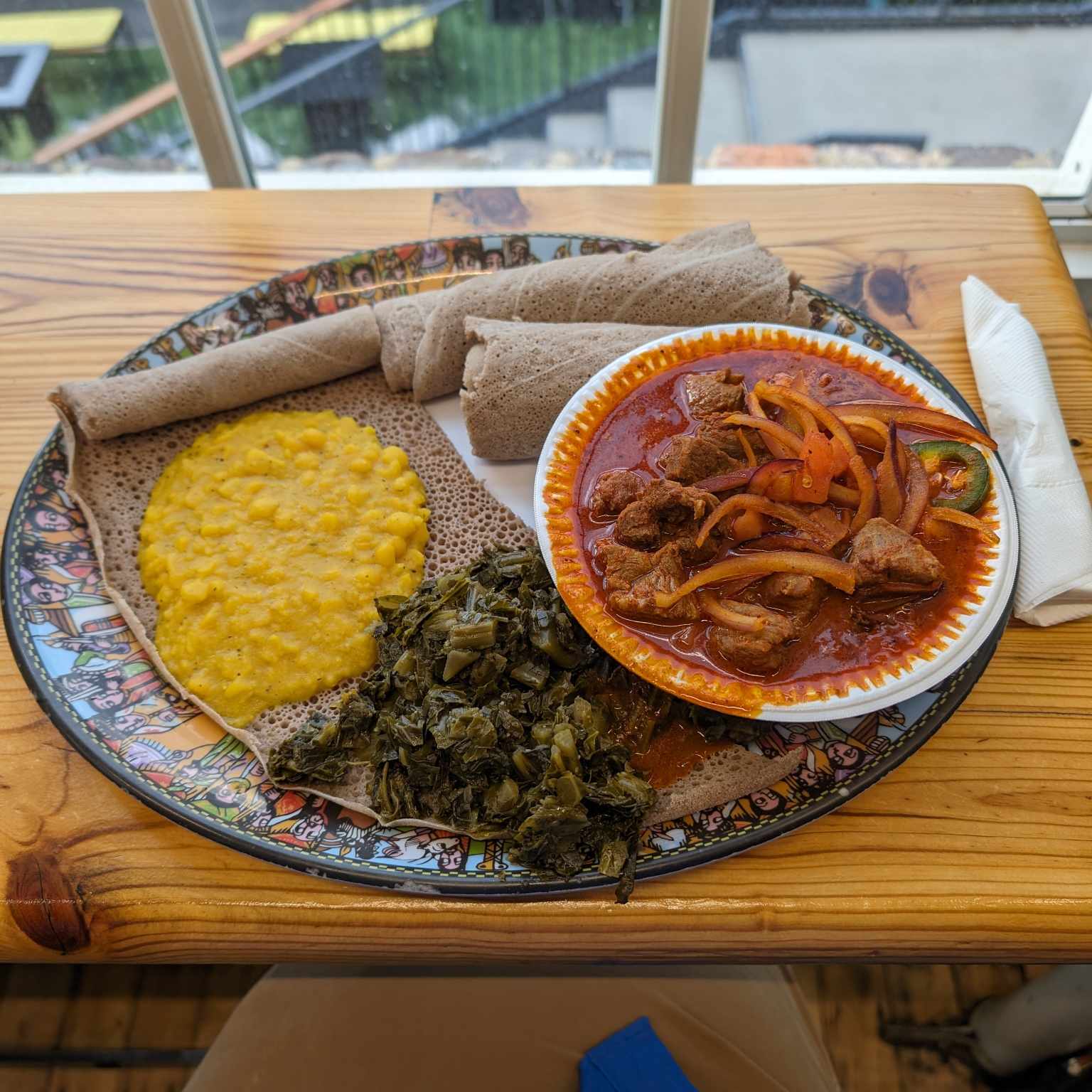
Enter in the delicious Ethiopian food I picked up the other day. Waiting for it to be ready, I recognized the person who walked by me. I called out her name! The person turned around! Sure enough, my old physics buddy is now a Crime Scene Investigator in Charlotte, NC. We made plans to get lunch and, yesterday, we did so!
Remember this? I sure do…
The conversation we had touched on many things. Catching up with the past five or six years, sharing stories of what happened back in college, and – of course – lengthy explanations of the United Methodist Church and its multi-layered polity. One takeaway, however, was the power of words.
We often speak without thought. We do not think about what our words will mean to the person we are speaking too. Scripture describes thoughtless speech as being like, “shooting flaming firebrands and arrows,” (Prov. 26:18-19,) and as an all-consuming fire that burns everything in its path. (James 3: 5-12)
Thoughtful words, however, can bring life, and life abundant. If you close your eyes, I bet you can think of something someone said to you, something kind, even if it was decades ago. Those little bits of encouragement and assurance keep us moving in a life that can often seem overwhelming.
For me, I remember the first time someone told me I had a future in ministry, the kind words that carried me through many years of doubt. I remember friends praying over me in Youth Group a long time ago, when I was offering a message. I remember the little signs of kindness – a bookmark made by hand, help picking things up I had dropped and abandoned, a joke in the midst of a rough day – all these things build us up into who we are today.
I also remember my failings. Especially in college, I made many mistakes with careless words. I said things that hurt people, I broke off friendships that were dear to me because of pressure from other people in my life. I failed again and again and again. Though I’m certain most people have forgotten my indiscretions, I know not everyone will have. Something I’ve said has almost certainly affected someone negatively to this day, a barb sticking into their memory of what once was a goodly thing.
However, I was told in our lunch meeting that there were enduring things, things I said that lingered with people for good. In particular, I was reminded of a way I used to talk about personalities and relationship dynamics that changed how my friend understood herself. As was apt for my undergraduate work, these words were a metaphor from chemistry. The truth is, the way we see ourselves in relationship with others is a lot like how carbonyl groups react… (Pause for dramatic ooohs and aaaahs.)
The essence of my teaching was simple – some people need greater support than others, but all people seek stability in life. Some people, like acidic halogens, do not do well on their own, and so do their best to stay in constant contact with others. Some people, like amides, are in relationships that allow them to stably exist in the midst of others or alone. The average person, like an organic acid, is neither prone to being alone or to being surrounded by others, they find equilibrium. However, there is another group – the ketone – that stands on their own, seeking only to be with those who prove themselves as worth the social energy.
The groups in question, labeled
I would describe my friend, frequently, as a ketone. She did not need constant socialization, but chose to be around those who were willing to put in the time to be a part of her life. She was a ketone, proud and strong, and she kept using this identification in her post-graduate life. She told me she would frequently tell people she had just started to get to know, “I’m a ketone!” Simple, esoteric, but to the point. As she told this story, she adjusted the sleeve of her shirt and showed me a tattoo on her shoulder… A ketone, a permanent mark of how she had chosen to see herself, and a term that I gave her through our friendship to describe herself.
Acetone, the Ketone tattooed on her shoulder.
I was shocked in the best possible way. I had impacted her life by giving support, being a friend worthy of being a part of her social circle. I spoke a kind word, affirming her personal strength and stability. Now that is part of her, quite literally a part of her, and it is something I had forgotten I had ever said.
Our words matter – the harmful things we choose to say and the encouraging things we choose to say. We have life or death at the tips of our fingers and on the tip of our tongues. Think before you speak, speak life into this parched world. You never know when you may be humbled to find that the words you have spoken to those in your life became the foundation of something deeply, personally important to them. Let our words speak life and let that life transform them into the most excellent manifestation of their truest self.
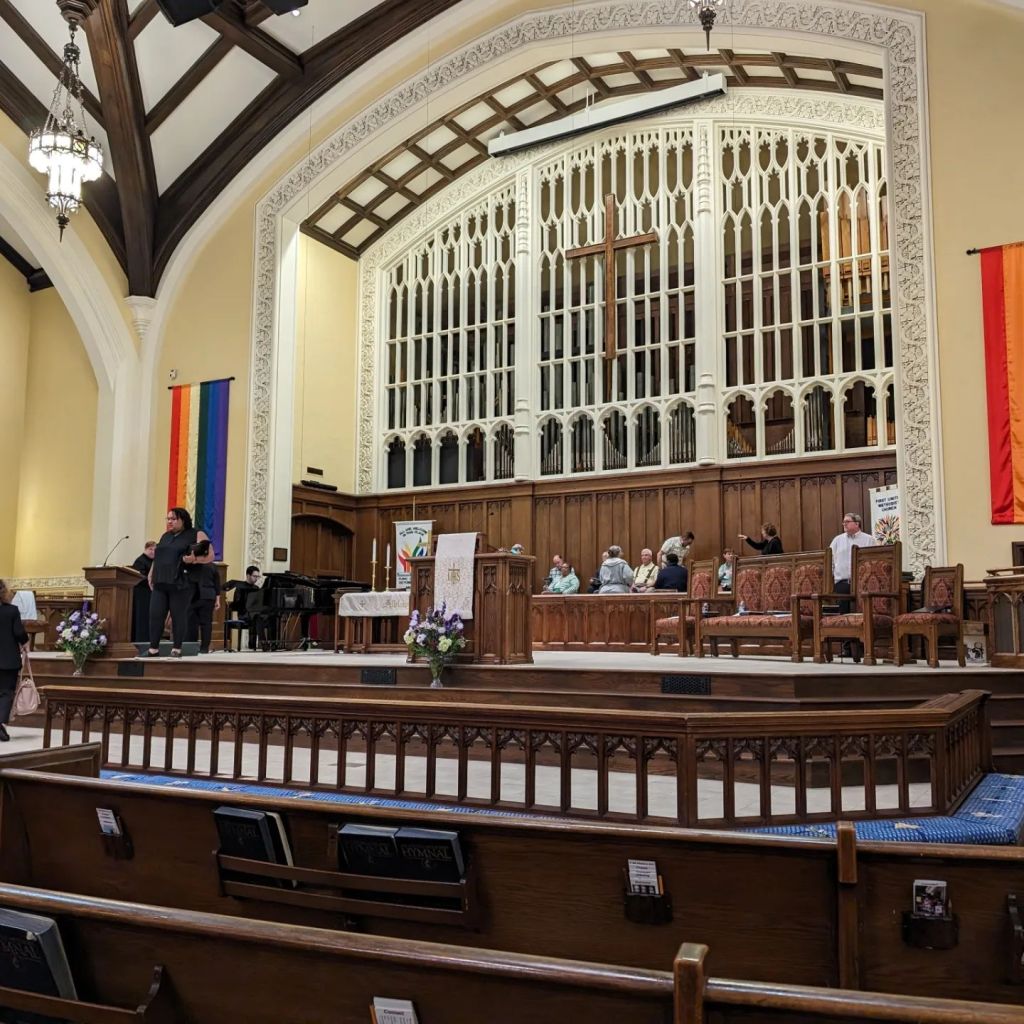
It is always a blessing as a minister to be able to sit at a service. I did not have to lead today as I sat with the people of First United Methodist Church, Charlotte. I was overjoyed throughout the service to find that, beyond not having to lead, I was also just enjoying myself. Going through life, we often find ourselves lost in what we are doing, but the reality is that we are in need as much as anyone who we seek to serve.
Today I heard a message that called many things into question, not in terms of cynicism, but in terms of Hope. When we look at the story of Philip and the Ethiopian eunuch, we will look at the fact that the eunuch is not part of the people of Israel and see how the church was expanded by his presence. Today, Bishop Cedric Bridgeforth told us that there are many people who our actions in the church has disenfranchised, as he called it castrated. We were all called to reflect on the fact that we are not just people witnessing oppression but people actively participating in it.
One of the ongoing elephants in the room regarding this General Conference is the upcoming conversations regarding human sexuality. Though this is not a blog that is intended to cover events of general conference, I come to a point where I have to say something about what transpires in a given day. As I sat in a reconciling congregation, a congregation that has taken the leap into accepting queer folk fully, my mind naturally settles in the reality of what is ahead of us.
There was a time in my life where the idea of a Reconciling Congregation would have seemed completely alien. It would be almost contradictory to say that LGBT people have a place in the church other than one of repentance. But that is not the John Langenstein who lives today. I have seen too many people that were written off by the church, but through whom the Spirit moved. Too many people who /I/ once wrote off as too far away from the fold of the faith to have a part in it.
I cannot help but make explicit what is implied. I am somebody who looks for the day where the church fully embraces all people regardless of human sexuality, regardless of their gender identity, regardless of anything, except for the three things we put forward and our Eucharistic Invitation.
Do you seek to live at peace with one another? Do you love the Lord Jesus Christ? Do you earnestly repent of your sins?
Those are the only things that truly matter. The Lord has shown to me, again and again, that whether people are gay, or bisexual, or trans, non-binary, cis – whatever they may be – God is working within them. It is not within my job as a minister, as a person, as anything, to question the calling that God puts upon their heart.
I strive to do what is best for all people and all things. The fact is that, that purpose – this charge to do something that is right – requires me to take a stance from now and again. My stance is always towards the inclusion of more people, the love of more people, and the transformative gospel that makes us able to become the body of Christ, regardless of our material composition.
In Charlotte this week, there has been differences of opinion and in the coming week as we debate human sexuality, we will have a great many people with a great many opinions. However, I am earnest in my belief that we are a Church that goes beyond our petty squabbles. I see in the many different things we disagree about, something greater. While we may disagree on the cultural context of Paul’s teachings regarding human sexuality and while we may disagree on how they manifest in our daily life today, I hope that we all agree on a few core things:
Jesus Christ, our Lord and Savior, was God incarnate – fully God and fully man. God our savior lived among us. He did the good work of loving us who refused at times to love him. For the sin of loving all whom he met, Christ was killed on a Roman cross on an offence to all people who draw breath. This same Lord rose from the dead three days later and the same Lord advocates for us through the Holy Spirit and to our Holy Father.
If we as Christians can agree in the death, life and resurrection of Christ, why can’t we disagree on the smaller matters?
The first draft of this that I am writing is me speaking into a phone while I wait to meet with an old friend outside of a bakery (more on that tomorrow…) In this moment I felt the need to get my initial thoughts out.
Today, I heard a bishop speak to me about call and about the need to follow that call, wherever it goes. It would be wrong of me to deny that my call is towards a more inclusive church. A Church that includes dissenting voices and a Church that includes people no matter how they find themselves expressing who they are. The Church is broad enough to include all people. If it is not then it is useless. For I believe in a God who said that neither height nor depth nor length nor width nor life nor death, nor anything in heaven or Earth can get between us and the love of God. If I believe in such a God, it would be folly for me to deny that he has a place for all people.
May the Lord bless us in the midst of difference to advocate for justice. As has already been declared by the general conference of the United Methodist Church in the year of our Lord 2024 – All people are worthy of human and civil rights. As we go, it’ll be farther than we have ever been and yet Lord, I pray that we will see greater inclusion in the coming days.
For those who read this and disagree or are shocked to hear me speak so frankly, I simply ask you to think of what you know me by. You can read through every sermon that is posted on this blog and see I’m as Orthodox as they come, at least as Orthodox as I can be.
Disagree with me. Be willing to speak with me, even to argue with me… but let us continue to love one another as we have up to this point.
May God be with us this week. May God’s will be done in all that we do, in what legislation is passed. Let us remember that God values all people and that we as human beings are the only ones that seem to confused how exactly that manifests.
Scheduling demands that we in the Press room have to step out during part of the service for a press briefing. Usually it is just a five to ten minute talk to see what UM News is covering and if any of the Communicators present have anything to share with each other or the wider Church. As we were there, either during or immediately after we prayed, a chant was heard from on stage… What was said in that chant? I don’t know. Yet the music of the sung prayer was hauntingly beautiful. It filled the space. I was ready to hear more when I came back to my seat.
I would also lift up the whole of our sermon this morning. Bishop Eben Nhiwatiwa gave a message full of joy and hope and humor that speaks to the peculiarity of this significantly more genial conference we all have been taking part in. As he said, “I must be at the wrong General Conference!” None of us were prepared for how good we all feel walking and talking and living and serving together. (Sermon begins at 24 minutes into the stream.)
This is the last day that legislative committees meet to discuss the legislation before the body. The final amendments and edits to the petitions are coming together and the work of next week is being scheduled with each report that comes out of the committees. Today we passed the Social Principles contained in Paragraphs 164 and 165 of the Discipline. They attest to several important things, but most of all they attest to the rights of all people who walk this earth with explicit language. No people can be denied their civil and human rights, and we in the UMC made a big step toward affirming these innate rights in all people.
Coincidentally, this was also the day that I was photographing the communion service being held during lunch. Communion is my favorite ritual in the Church. Baptism may represent our new birth, but it is in Communion that we are given the energy to continue on in our new life. Bread and Wine (Unfermented or otherwise,) are blessed and it becomes for us the presence of Christ, the visible reality of his sacrifice for us. We share in that emblem of suffering and in it find life.
In West Virginia our Bishop, Sandra Steiner Ball, is overseeing the Susquehanna Annual Conference jointly with Bishop Cynthia Moore-Koikoi of the Western Pennsylvania Annual Conference. In partnership with our colleagues there, we decided we would help with story and photo coverage. The Church is relational in every aspect and so we have to strive to give tangible support to each other whenever we can. Also, it is just nice to be nice – sometimes you do not need a grand reason for it.
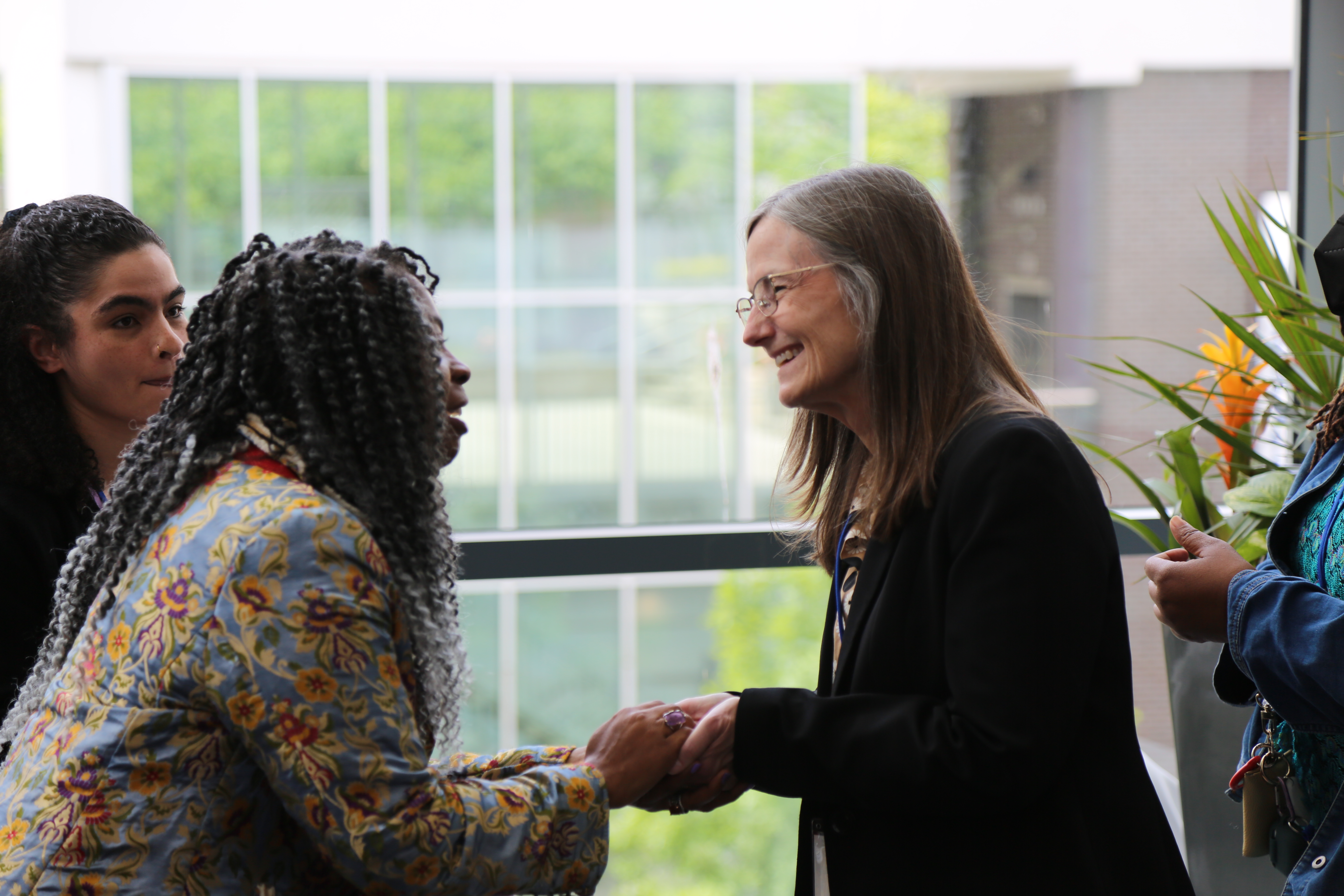
Bishops Cynthia Moore-Koikoi and Sandra Steiner Ball
A goodly amount of people were gathered in that hallway, (afull article with all more specific details will be posted later and I will share it when it is available.) It was a moment of peace in the midst of the busy rush of conference.
This year has been defined by a Spirit of peace and joy and celebration and I pray that this will continue to be our Spirit. Even a peaceful gathering is taxing on people though. You get tired and uncomfortable, you get the strange crud that everyone seems to be passing around right now. You just get worn down, little by little.
Enter the Eucharist, a small moment of Sabbath in the midst of the world and its constant demands for more and more of us. We receive the simple gifts of bread and of the vine and they become so much more for us. Visible signs of God’s grace, tangible to the point you can taste them.
Holy, holy, holy Lord – we praise you because you come near to us in this blessed sacrament, this holy mystery. Let the Spirit of Joy and of Peace carry us through next week as well.
I’ve done a lot of walking this week. From one end of the convention center to the other, to the train station, to the Airbnb, to the food mall (yes, that’s a thing and it is wonderful.) I’ve been averaging several miles a day alongside the notetaking, the video editing, and the staring at the conference session from the News Room… Somehow, I’ve felt more energized than I have in a long time in the midst of all that.
Food…
… Mall
As Christians, we believe that God dwells within us at all times, but to feel it fully we must be aware. Awareness requires activity and activity requires a goal – at least to do more than twiddle our thumbs. The Word of God is described in scripture as alive and active, sharper than any double edged sword. (Heb. 4:12.) This Word is not just scripture, but the source of life itself – Jesus Christ, the Incarnate Word. Incarnation, living, moving toward a goal – these are all actions the Spirit embodies through us.
Today’s session of the Conference had very little to it in terms of business. We had a few things to approve – mostly procedural – but the floor and the people were still active. The band which led us in opening worship was one of the best I’ve ever heard (I highly recommend watching this morning’s service even if you watch nothing else.) Tomorrow will be full from sunup to sundown, but today people had room to move around, even while doing legislative committees. In that movement there has been the opportunity to discover purpose. This, and of course, time to walk.
Many people in the Press Room where I have been living this week, are doing work here for the first time. Regardless of previous experience in Communications or Methodism, many of us have not covered a General Conference and have not spent much time together in the same room. That is rapidly changing. I find myself learning names (an accomplishment considering how forgetful I am,) and walking around to ask specific questions of people that I know, know better than me.
Annual Conferences are collaborating on projects and sharing resources where they can. Our own West Virginia Conference is working tightly with Western Pennsylvania, making sure we are doing all we can to tell the story of what God is doing at General Conference. Wandering around Charlotte and around the Convention Center, God is making sure people meet and seeing that those meetings are not just social exchanges.
My writing partner throughout this week has been the magnificent Audrey Stanton-Smith, Editor of the United Women in Faith’s Response Magazine. She attributed the success we have had in writing for Conference to “meeting the right people at the right time.” I have to agree. This has defined not only the work of covering Conference, but Conference itself.
Experts are all around me. For this I am blessed. Surprises are all around, like seeing an old friend from College at a restaurant just up the way. For this I am blessed. Stories are shared, laughter is heard, and hijinks ensue. For this. I. am. blessed.
We walk together in life. That is the substance of what I have to say today. We are never alone and life is so much better when we spend time intentionally living it together.
I wrote a draft of this story that went down all kinds of rabbit holes. Weighing aspects of connectionality and what regionalization might mean in my context and beyond…
It was a horrible piece of writing. Principally it was bad because it betrayed the purpose of these letters. I am looking for beauty and the way that God is showing up at conference. While that certainly includes the plenary sessions… The legislation itself is just a tool and the session with it. The Spirit moves through them, but the Spirit is not contained there. I hope the difference is clear.
I have seen more prayer today than any other day – not to imply a lack of prayer anywhere else – but to testify to the amount of it today. People are worshipping and advocating and being the Church. Today that meant talking about regionalization. It also meant saying goodbye to the Eurasian Conference. Russia, the Ukraine, Belarus, and Khazakstan… All no longer part of the United Methodist Connection. Yet, sent off with love and prayer and on good terms with the body.
I think the thing we lost in the last few decades (lets be honest since 1968,) has been the reality that we are all supposed to be working for the good of one another. We say that is our goal, but we are all guilty of putting ourselves first, and not just occasionly. Particularly in the UMC, the US has always been at the center of everything – we cannot be that any longer. We are not the fulcrum on which the whole world must pivot, we are a part of a much larger whole.
I am frustrated at times with our treatment of conferences outside the US. We tend to treat international members allies or enemies as frequently as we treat them as family. A central conference member that supports traditionalist ideas is lauded by that camp and a central conference member who supports the progressive causes is lauded by another, and to a certain extent that is natural – we like people who agree with us! Yet we often find ourselves promoting the voices of those who are politically useful to us and ignoring others. If I have an enemy in another conference they may be lifted up to become a target and if I have an ally they may be lifted up to become an object in my arsenal – but if I do not see them as a person and a sibling in Christ all is lost.
Throughout the last extended quadrennium, Africa especially has been a chesspiece in a lot of discourse about the UMC. They are not partners in ministries and peoples made in the image of God, but polictio-theological ideas to be supported or opposed. When we dehumanize others, however we do so, we break something deep seated in both our humanities.
During the United Methodist Association of Communicators meeting, I was introduced to the social media of the South African Central Conference. I do not follow it religiously, but I do take time to go there now and again to see what is happening there. Church, it happens, is happening there. The people of God are gathered together and proclaiming salvation, serving one another in a Spirit of love, and striving toward perfection as only Methodists have the language to fully name.
Our collaboration with other conferences, with other people, even with our immediate neighbors, is not always done with complete agreement on important issues. Yet, if all people are genuinely seeking to do good, a way forward will present itself. It requires repentance, it requires self-reflection, and sometimes an acknowledgment of the frustratingly long arc toward justice… but it can be done.
The choir sings at morning worship in Charlotte. – Photo by Paul Jeffrey/UM News.
Regionalization will make it easier to be a global church, but we must not forget our international siblings or our immediate family in the midst these changes. We will still need to move beyond seeing others as political entities and not human beings.
As discussion of the constitutional amendment regarding regionalization came to a close, someone described our Church with a greek word – “oikos.” I have stolen that for the title of this entry. Oikos means “household,” or “dwelling place.” The word hit me as being apt for what the United Methodist Church is to me and many others. This is where we find ourselves fulfilled, where we are made into a family together. Home is the best word to describe what the UMC is.
We care and we fight and we fuss because it is our home. I would hope that as legislation continues to be discussed and as we continue to strive to work togehter for the good of all people, we do so as a family. I hope we come to embrace all members of that family – not ignoring any part because of who they are or where they are, but in all things regarding others as more significant than ourselves. Hopefully other parts of this conference’s work will establish the full extent of our call to love others in official writings and doctrine, but we will have to see…
I realize as I sit here, that I could never leave the United Methodist Church. Not just because I have no desire to, but because it is the place my heart has found rest. If home is where the heart is, I can never leave home. In the same way that I feel an overwhelming desire to be back among mountains and my own four walls and surrounded by cats and by my wife… I would always long for this Church if ever I tried ot leave it.
The conference has begun properly. With song and with sacrament we have declared Charlotte to be a place where the Spirit is going to move and the Church is going to act. It is a day of celebration, of reflection, and of collaboration across every aspect of our connectional lives. I have seen so many people and talked to a significantly smaller number of them, but in my few interactions it has been clear that God has created an amazingly diverse body of people within the United Methodist Church. In the News Room, I sit just a little ways away from communicators for French, German, Korean and Portugese language publications. All around me are people from all backgrounds and locales around the world.
Outside the plenary hall, there are two things I have seen again and again. The first is between people on all levels of church leadership. One person sees another, a shout is raised over the crowd, and hugs immediately follow. So many people are seeing old colleagues and friends they may not have seen in decades, and yet we are brought together here. I myself have seen old seminary friends, Communicators I’d met previously at UMAC, and people tied to work I’ve done before I entered into pastoral ministry. Every day I’ve learned more and more people I know are here… and I really do not know that many people. The nature of our work demands that we stay in contact and we cannot resist that call.
The second sign is like it. One person sees a group of Bishops from across the room. They cry out, “Bishop!” and, more often than not, the bishop who turns around is their bishop. It isn’t magic, it isn’t 100%. However, I am made to remember the words of Christ. “My sheep know my voice…” Perhaps the other side of this is equally true, “A shepherd knows their sheep.” I am thankful for attentive bishops who know the sheep they shepherd.
Today has been busier, so I do not have quite as many reflections on the nature of life or a good bowl of curry. Still, in the midst of reading through legislation and typing drafts of articles, my mind is wrapping itself around the meaning of this gathering.
With the official start of the General Conference, the eyes of the world turn toward Charlotte. A consistent prayer is carried from the lips of onlookers, “Thy will be done.” This is among the most dangerous prayers we can pray, asking us to abandon what we want in favor of what Christ would have us do. It is a prayer we often pray. Yet, it is a prayer we seldom say in earnest.
“Thy will be done,” is usually a thing we say to mean, “God, you and I are simpatico, so let’s get this over with.” It is a far cry from what the words should actually mean. Even Christ, praying in the Garden, prayed “Thy will be done,” with the hope that God would relent from the price that was about to be paid. We pray “Thy will be done,” hoping that it will result in God bringing about what we wish to see… We seldom pray it and accept what comes as God working out God’s will on Earth. We are different from Christ in this.
We know something about God or else we would have no faith. We guide our life by principles we believe align with God, so why would we not have hopes of what is to come and believe that God will bring them about? Yet, if we believe in the prayer, “Thy will be done,” we have to be willing to accept that sometimes that means things will turn out differently.
When prayed in 2019 many of us were disappointed that the Traditionalist Plan passed. When it is prayed this year, if more progressive legislation passes, still others will be disappointed. Yet, what do we do, as people who believe God is active in the world? Do we think that only one outcome will be the will of God? Neither? Both? I do not rightly know, but I’m thinking about it this week.
We believe as United Methodists that God allows us to choose our own way through this life. Our salvation is not chosen for us and neither is our conduct. A saved person can sin and the unsaved can do right, God’s grace and liberty allow for both to be true. Institutions can likewise sin and can do what it is right. Simply because something passes at conference does not mean that it is good, just because it fails does not mean it was not good.
I have many opinions about things. I would say one of the most obvious things about me to those who know me is my ability to form opinions about things. It is a blessing and it is a curse. Yet, I believe firmly that as a Christian, a Methodist, and a Minister, we need to have cogent theological arguments for what we believe. That is why I am frustrated when I say, I have no ability to know what I am really asking when I say, “Thy will be done.”
We all strive to know God’s will, but until we see it erupt from the wellspring of the Spirit, we cannot truly discern it. We all strive to know God’s will, but the world has seen so much horror and sadness I cannot take every event in history to simply be, “The will of God.” We all strive to know God’s will, but I cannot imagine God would will any person be excluded from the family of God, simply for who they are. And yet… And yet… And yet…
Bishop Thomas Bickerton, the president of the Council of Bishops and West Virginia Native (woot woot!) preached during opening worship. His words were firm, they were beautiful, and they captured something of my own feelings as I sit here awaiting these two weeks. He introduced a practice of praying before each sermon he gives, “Oh God, remove me from me, and fill me with you.”
Before I sat down to write this I thought I would call this letter, “Kenosis,” a Greek word meaning “To empty.” It is used in Philippians to describe Christ taking on human form. However, the focus of the Bishop’s prayer is not the emptying, so much as the filling. Yes, we empty ourselves of our own desires – but if that were it we would be left as empty people. Instead, we empty ourselves with a purpose. We empty ourselves so that we can be filled with the Spirit. We ask God’s spirit to rest upon us, for an “Epiclesis,” not just to hollow us out in “Kenosis.”
When we pray, “Thy will be done,” we are doing something similar. We are asking the Spirit to come down and dwell within us. To guide us. To stop us or usher us forward. Yet, proud people that we are, we often keep running in the same direction no matter what.
I know what I want out of General Conference. I know what people who disagree with me want out of General Conference. Are we willing to accept that God’s desires might encompass those, go beyond them, or even contradict them… I will try and understand God’s will whether I get what I want or not. All I can do is ask for God to fill me with the Spirit, and follow that Spirit wherever it may lead me.
The first full day I’ve spent in Charlotte has been… full. The actual legislative process begins Wednesday, but delegates, staff, bishops, and news teams are all running around preparing for the next week and a half. I’m writing drafts that may not ever see the light of day, but as a wise friend said, “It is always easier to edit than to create.” Doing the basic research and work now will save me trouble in the long run.
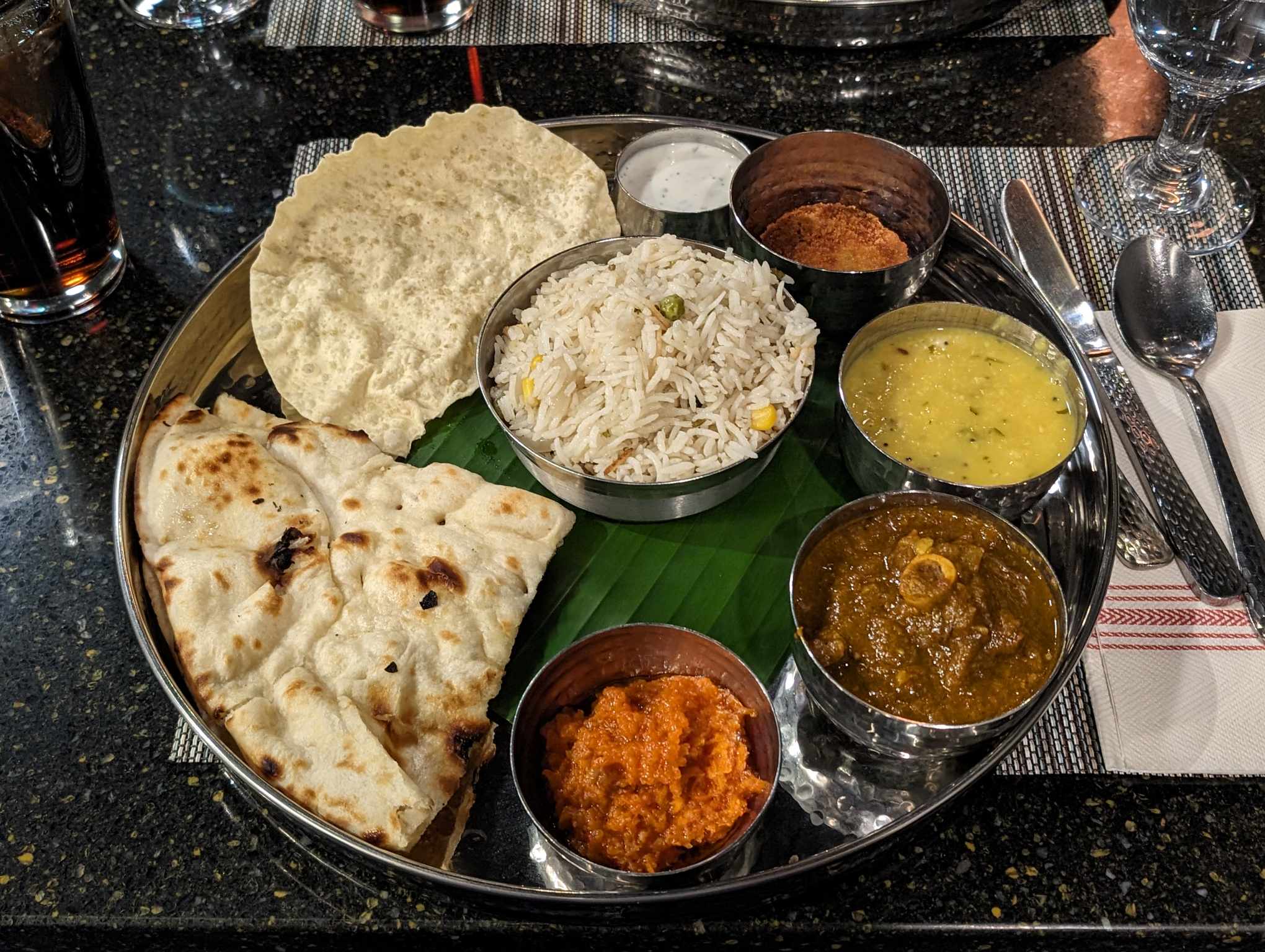
I took a break from prep to go get lunch with a friend. Delicious curry at a good price. I’d do an ad pivot, but I’ll retain the sanctity of this blog for now. The lunch itself carried a deeper reality to it than good food though. Connection is what defines us as human beings, more than anything. To sit and talk with someone: to celebrate and speculate, to laugh and to commiserate. It is a holy thing.
The thought that sat with me as I walked around the circumference of the Conference Center and the nearby park was the importance of remembering. I may never be in Charlotte again, but I am here now. There will never be another 2020 2024 General Conference, but there is now. The brickwork in the center of the park and the aggressive rushing of the fountain. The awkward engagement photoshoot next to the columbarium of a Catholic Church. All of these are things that I have to appreciate while I am looking at them, because I may not see them again. I can never see them as I see them now, that much is certain.
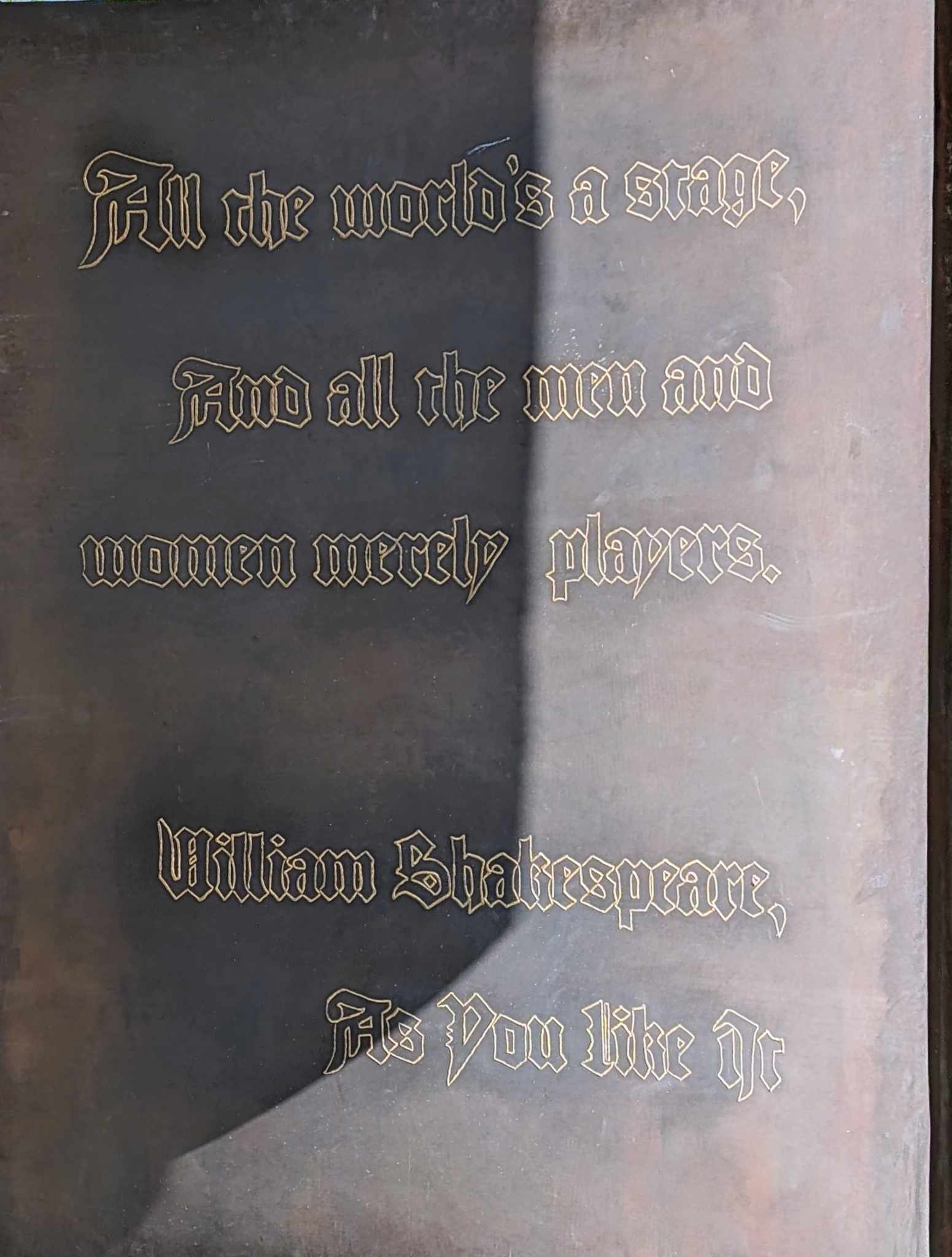
I see things both funny and serious as I wander. I find it hilarious that a statue showcasing the wonders of the written word seems to be accidentally implying the foundation of all literature is Sophocles’s Oedipus Rex.
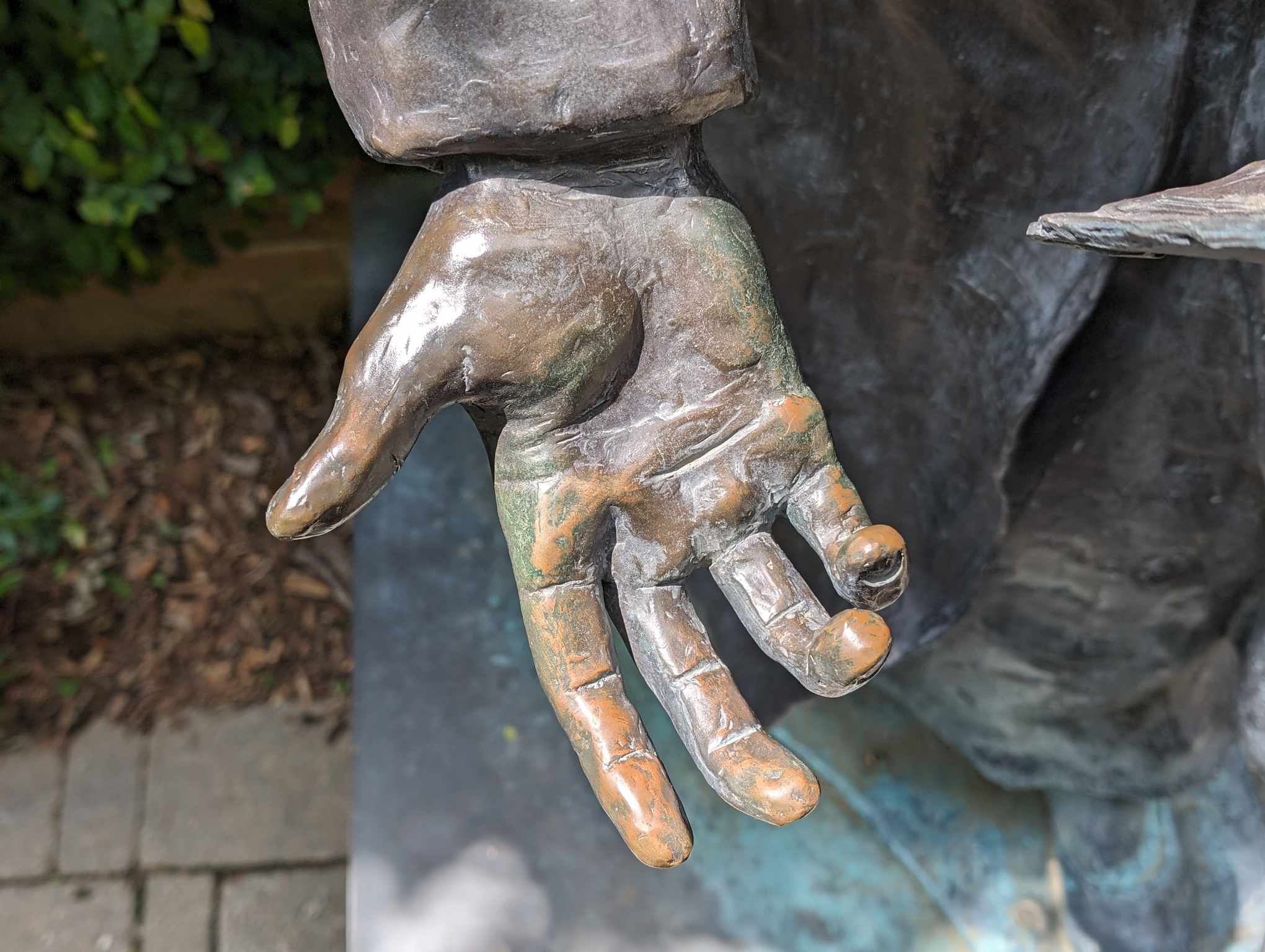
Then there are the more serious observations. Beside the columbarium, where the faithful dead rest, there is a statue of St. Ignatius of Loyola. He stands with an arm outstretched, and that hand he has put forward is worn. There have been countless people who reached their hand out to the Saint and held it. In prayer? In desperation? It does not matter, but people saw the face of Ignatius and in it saw a source of comfort they had to feel to truly know.
I took hold of Ignatius’s hand too. I looked in those bronze eyes and spoke to him. I do not know my full feeling on how we are to engage with those who have gone to glory. I know our Articles of Religion call the invocation of the Saints, “a fond thing, vainly invented…” Yet I do believe that all the faithful dead remain conscious of us in paradise. I trust they still pray for us.
So I spoke to Ignatius, the man or the idea it does not much matter.
“Ignatius, you founded the Jesuits. I don’t know if that means we would agree on much if we met or not. However, I believe we are both men of God, and that is enough. Ignatius, pray for all of God’s people, and do not forget your siblings, the Methodists, for we sorely need it.”
I hope we all may continue to pray. There is life and hope abundant, but we must see it and embrace it to fully know it. May the Saints below and the Saints above never cease to ask God to care for God’s Church. Here, as we United Methodists gather, I pray God will work wonders here in Charlotte.
Today begins my journey down to Charlotte, NC for General Conference 2020 2024. It is the first General Conference I’ll ever have attended, as well as the first one I will be working as a member of the press for. My purpose in going is to capture the stories of what the Church is doing, and specifically how this impacts people of the West Virginia Annual Conference. I will also hope to show our delegates and members shine in their connectional roles. This is a chance to tell the story of how God is at work in the midst of a process we often forget is founded on the Spirit – not just the fights that we have in the Spirit’s presence.
I go, like all people, with expectations and hopes and predictions. Yet, I am not writing this to be another think piece, letter to the editor, or “inside track,” to the happenings of the General Conference. I don’t know how many times I’ll sit down and type something out, I’m not even sure the format I’ll land on for them, but I know I feel compelled to write.
I feel compelled to write about the beauty of what conferencing allows us to do, to capture the humanity of those gathered in the process. People from all over the world are coming together and in that gathering there is hope. Hope for a sort of unity that transcends the barriers we place around ourselves. Hope for a Church that is ever expanding in its shows of grace. Hope for a future with better things ahead than were ever behind us.
I have become more and more enamored with the simple beauty of life. The flowers that grow out of the ground, the blooms that demand not only to live but to enrich the world around them with color. The expression of compassion that all living things seem to be capable of showing – from a cat curled on my chest to the bird that circles its nest. Above all else, I love humanity in its broken glory. Reflections, each and every one of us, of the Divine Image, we shine like nothing else. We laugh, we cry, we hurt, and we reconcile. We aspire to the height Irenaeus put forward for us, “The Glory of God is a living person, and the life of a person is in beholding God.”
I hope to capture some of the beauty of humanity in sitting down and reflecting each day. Not in denial of our worse tendencies nor to obfuscate the difficult work of legislation. I only wish to see beauty, to name it, and to give it its due consideration. There is a need to tell stories that are beautiful, in a world that is so often full-up on sorrow. The bold defiance of the lilies, here today and gone tomorrow. The quiet assurance felt by sparrows that go by their business day after day. Christ told us to find peace in these simple things. May the beauty of Holy Conferencing, and the people who make it happen, be present in all I deign to write.
John Langenstein. 04/21/2024 At my desk at home, awaiting services, and the long drive to Charlotte.








 Teach us to Number our Days